



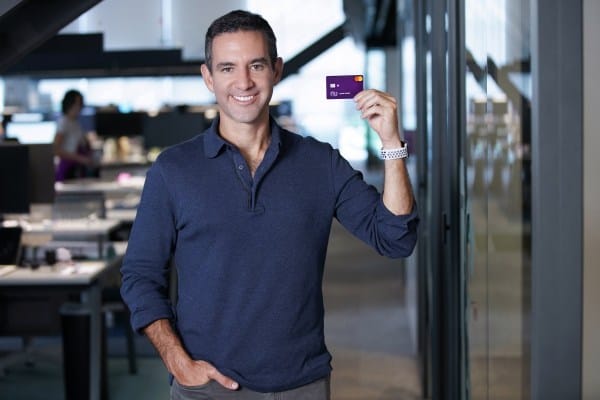
Mientras que la pandemia ha dejado a algunas startups sin dinero, el bien llamado neobanco brasileño Nubank está nadando en él. Esta mañana, la empresa ha anunciado que ha recaudado una ronda de serie G de 400 millones de dólares, lo que sitúa su financiación total hasta la fecha en 1.200 millones de dólares. Pero lo más destacable, además de su nueva valoración de 25.000 millones de dólares (frente a los 10.000 millones de 2019), es su base de clientes de 34 millones de usuarios, que han construido desde el lanzamiento de la fintech en 2013.
“Hemos pasado de 12 millones de clientes en 2019 a 34 millones únicamente gracias al boca en boca”, afirma David Vélez, cofundador y CEO de la empresa. En septiembre del año pasado, la empresa incorporaba 41.000 nuevos clientes al día. NuBank se enorgullece de tener un coste de adquisición de clientes nulo. Vélez dijo que la empresa gasta lo que sería dinero de marketing en “grandes salarios” y un servicio de atención al cliente superior, lo que a su vez crea clientes “fanáticos” que comparten su amor por la marca con otros.
La nueva valoración sitúa a NuBank como la cuarta entidad financiera más valiosa de Latinoamérica y el mayor banco digital del mundo por número de clientes y descargas de la app.
La ronda fue liderada por inversores privados y públicos, incluyendo GIC de Singapur, Whale Rock e Invesco. Los actuales inversores Tencent, Dragoneer, Ribbit Capital y Sequoia también participaron en la ronda. Vélez es un antiguo socio de Sequoia y es originario de Colombia, aunque asistió a la Universidad de Stanford y trabajó en Estados Unidos durante muchos años.
NuBank, con sede en São Paulo -la capital financiera de América Latina y hogar de 12,8 millones de personas-, se ha expandido a Colombia y México y planea utilizar la nueva financiación para reforzar sus operaciones en esos mercados mientras sigue desarrollando su oferta de productos en Brasil.
Lo que comenzó como una empresa de tarjetas de crédito funciona ahora como un banco de servicio completo, sin las engorrosas sucursales bancarias, lo que constituye una forma en que la empresa ha podido asignar su financiación principalmente al crecimiento.
“La gente estaba harta de ser maltratada y de pagar altas comisiones”, dice Vélez, refiriéndose a la experiencia bancaria notoriamente burocrática y espantosa de Brasil (compárela con ir al Departamento de Tráfico, pero con regularidad). Históricamente, para pagar las facturas mensuales en Brasil, había que ir a una sucursal bancaria y esperar en la cola -a menudo al aire libre en el calor- hasta que llegara el turno. Las colas daban la vuelta a la manzana como la de una Apple Store cuando salía el último iPhone.
“Es como si te hicieran un favor abriéndote una cuenta y luego cobrándote un 450% de interés al año”, dice Vélez. “Nuestra apuesta fue que a la gente le gustaría ser tratada como humanos”, añadió.
En 1994, cuando se introdujo el real brasileño, se fijó a 1:1 con el dólar estadounidense. Sin embargo, en los últimos años, con el mayor escándalo de corrupción de la historia del país, que ha llevado a tres presidentes consecutivos a la cárcel, a la destitución y a la incriminación, respectivamente, la economía ha caído en picado. Y el COVID-19 ciertamente no ha ayudado. El tipo de cambio es ahora de 1 USD por 5,40 BRL. Con los bajos tipos de cambio en Brasil, Colombia y México, una inversión de 400 millones de USD crea una pista de aterrizaje considerable, especialmente porque la operación de Nubank en Brasil ha sido positiva en términos de flujo de caja desde 2018.
La compañía es conocida por llegar a la población no bancarizada en Brasil, especialmente a aquellos que simplemente no estaban en posición financiera para obtener una tarjeta de crédito. Los bancos tradicionales están presentes en alrededor del 80% de los municipios brasileños, pero teniendo en cuenta que el producto basado en la app de Nubank es agnóstico a la ubicación, es capaz de llegar al 100% de los municipios, dijo la compañía. Además, ha estado ayudando a los brasileños a crear crédito. Su tarjeta de crédito, de color púrpura, comienza con un límite mensual de 50 reales al mes (unos 10 dólares). Si el cliente paga puntualmente el primer mes, su crédito sigue aumentando en los meses siguientes.
Entre sus productos, Nubank también ofrece una tarjeta de débito y una cuenta de ahorro, y aunque no tiene sucursales propias, se puede sacar dinero de los cajeros automáticos de la red, como es habitual en Estados Unidos.
“Nubank nació de la convicción de que la gente merecía unos servicios financieros mejores, más transparentes y humanos, que les permitieran tener el control de su dinero y su futuro. Empezamos hace siete años en Brasil, un país con uno de los sectores bancarios más concentrados del mundo, y conseguimos liberar a millones de personas de la burocracia y el dolor. A través de la tecnología y el servicio humano al cliente, pudimos tener un impacto positivo en su vida diaria”, dijo Vélez.
Por
Marcella McCarthy